Method to Madness Has a New Home!

Method to Madness Has a New Home!
We have moved! Click on the banner above to join us for new content from 2021 to present!
Showing posts with label gaming. Show all posts

QUICKIE -- Cyber Shadow


Cyber Shadow is a side-scrolling action-platform video game created by Finnish indie developer Mechanical Head Studios and published by Yacht Club Games. Featuring an 8-bit aesthetic, it follows a cybernetic ninja named Shadow who sets out to rescue his clan in a world overrun by machines.

The game is being mostly developed by Aarne Hunziker, who is the sole member of Mechanical Head Studios. It was first shown at PAX East 2019, having been in development from years before and silently announced before that event. It contains stated inspirations from other platform video games such as Ninja Gaiden.


Fact Sheet


Game Name: Cyber Shadow

Developer: Aarne “MekaSkull” Hunziker – Mechanical Head Games

Publisher: Yacht Club Games

Release Date: January 26th, 2021

Platforms: Steam, Nintendo Switch, PS4 and PS5, Xbox One

Price: $19.99

ESRB: E10+


Description


The world has been taken over by the evil Dr. Progen and his merciless synthetic army. A desperate plea for help sets Shadow, the sole survivor of his clan, on one last mission to uncover what started the path to perpetual ruin. Your robotic companion, L-Gion, is your only guide through the ruins of Mekacity. How far will Shadow go to protect his clan and the one he loves? Is there more to their bond than meets the eye? Only you can unlock the secrets to your clan’s ancient powers. Hurry before you run out of time! The road to redemption awaits in Cyber Shadow, the quintessential Ninja Action game.


Gameplay


Cyber Shadow is a side-scrolling platforming game in which players control a ninja character who battles enemies with a sword and various special abilities acquired as subweapons. It features an 8-bit aesthetic which shares similarities to Shatterhand and contains several gameplay elements of Ninja Gaiden, Mega Man, Castlevania and similar games, which include snaking paths and occasional backtracking. Several bosses are present

The game's story is told primarily through cinematic cutscenes, though in-engine ones are used as well.


Features


  • Experience sharply honed ninja platforming action! Dash, slice, and leap your way through the depths of Mekacity as you explore claustrophobic factories, corrupted research labs, fortified coastlines, vast skyscapes, and more!


  • Authentic 8-bit presentation with handcrafted sprites, a detailed pixel aesthetic, and perfect controls. Modern touches like fluid animation, multilayered parallax backgrounds, and evolved game design.


  • Powered by the lost souls of the ninja clan, Dr. Progen’s army mercilessly hunted down all life forms. As the sole survivor, you must take down more than a dozen apocalyptic bosses, ranging from enormous war machines to your synthetically-enhanced clan rivals.


  • Rescue your clan to unlock permanent Ninjutsu skills and abilities. Attack from afar with shurikens and kunai, or get closer by using your double jump, cross slash, or wall slide techniques. Summon fire, charge slashes, parries and much more to realize your true potential.


  • Experience a gripping story– told both in-game and through animated cinematic story scenes between the action. Shadow returns from oblivion, hurtling through Mekacity on borrowed time for what will surely be his last mission. It’s unclear what transpired before he met his fate, but his clan was betrayed. What has become of the Clan’s master? Who can be trusted when nothing is as it seems?


  • Pulse-pounding soundtrack by Enrique Martin.


The Verdict:


In terms of difficulty, this game definitely lives up to the Ninja Gaiden (NES) comparisons. I can't say that it's as cheap and downright brutal in terms of the randomness that's involved with a lot of that game, but there's sections of this game that truly test your tolerance for these types of platformers with checkpoints far and few with the instant kill hazards. This game also sports that annoying as hell "knockback" (think classic series Mega Man) from suffering any type of damage. Hell, there's even some enemies that can juggle you or hit your hurtbox so many times during active frames that the damage multiplies per hit. That's insane for that to even occur when there's already enemies that deal 2-3 points of damage per hit then hazards that deal 4-5 points of damage in the tail end of the game.


Get ready for some Battletoads Turbo Tunnel PTSD flashbacks...


I liked that the difficulty doesn't just ramp up out of nowhere either. The first few chapters start off pretty fair until the game starts challenging your mastery of every new ability/skill you acquire. There's a motor bike section that's reminiscent of Battletoads' Turbo Tunnel, but nowhere as difficult. I'm sure most NES era gamers will have PTSD flashbacks during that section though. 

In-game "feats" are tied to unlockable trophies/achievements in this game that I'm sure will warrant a few replays of the game, such as completing the entire game in less than three hours, beating a specific boss with only your sword or merely the shuriken, or even a challenge where you take no damage throughout your entire journey to the first boss. Completionists will have their hands full trying to platinum this game. Some of those feats I read in the menu and flat out said fuck that noise when I saw them. 

I can't call this game a Metroidvania in a traditional sense as you really don't backtrack to all of the levels in a traditional sense. Later in the game, you have the means to fast travel back to the levels that you have completed for health and mana upgrades that you have missed. There's a few optional bosses that can be bested for bragging rights as well. These optional bosses are at the end of "alternate" pathways through some of the levels that are reminiscent of classic Castlevania titles. 


This boss wasn't too hard but the biggest challenge was NOT hitting the fire pillars confining you into the area that instantly kill you if you manage to touch them. That's pretty hard to do if you're trying to make the most of out hitting him with Dash Strikes repeatedly before he can recover/self-repair.


I thought the bosses were the highlight of this game with each one standing out over the one before it. They always test your mastery of new abilities or applications of a combination of techniques learned throughout the game. Struggling against a boss usually comes down to you not using one of Shadow's many skills/special moves to the best of your abilities. Like previously mentioned, there's some pretty gnarly feats/challenges tied to some of these battles for those looking for an additional challenge. 

I really hope that a boss rush mode is in the pipeline for a possible future update/expansion. This game has far too many fun boss fights to not have a means for you to revisit those encounters without having to replay the game in its entirety. 


Special Items

Special items can be found around Mekacity or purchased from service pods. They have 3 health which is depleted if you take damage.


Power-ups, or rather sub-weapons reminiscent to the Ninja Gaiden series, can be found sparse throughout the game. If you find a power-up or can manufacture them via spending collected essence at the save points/checkpoints, then you are able to further enhance Shadow's offensive capabilities. These power-ups last until you take three hits and are removed until either you regain them upon death or purchase another from that particular checkpoint. 


Gives your blade some extra reach. Accumulates on top of blade upgrades for some truly epic swings!


A blaster that follows you around and charges up a powerful shot if you refrain from attacking. Can be fired through solid obstacles giving you a strategic edge!


A rotating contraption that destroys everything in its path. Strike it with your sword and it will swing forward (or upward if using rising fire).

Another special item that can be acquired throughout the game.


And more! Using each special item to its fullest will significantly increase your firepower. Experiment with which one suits you best and try and hold onto it! Can you find all of them?


My personal favorite out of the bunch was the Swag Blade, but you definitely don't get to use that subweapon as often as one would like. 


Skills and Abilities


Speaking of his unique skills it should be noted of what each of them do to enhance Shadow's abilities throughout the game. 


Shuriken / Kunai (Up + Attack)
 

This is one of the first abilities that you will acquire in the game. Throughout the game, you will find uses for Shurikens here and there, but when you get the powered up versions of all of your abilities, the Kunai will be your go-to option over the Shuriken over the duration of the game. Your Kunai explode after a few seconds and deal considerable damage. It's a much safer option than jumping up and slashing most airborne enemies, especially in the tail end of the game.


Airstrike / Charged Airstrike (Down + Attack, while airborne)

Think of this like your pogo jump of sorts, much like Scrooge McDuck's trademark attack of the same name from the classic NES DuckTales games or like Shovel Knight's main method of attack. Bouncing off enemies with this attack allows you to jump higher and allows you to do this attack again in succession. By the end of the game, you are highly encouraged to have full mastery of this technique to the fullest. While charged, this attack simply deals more damage. 

I like this move but it definitely has some flaws, with the biggest being that once you execute it, you MUST commit to that animation until you hit the enemy below or the ground. You can easily pummel to your death into a bottomless pit or pit of spikes by misjudging the distance with this attack. The upside of this attack is that it allows Shadow to bounce off several enemies or a single enemy multiple times in succession with proper placement. This makes dealing with airborne foes much, much easier. 


Rising Fire / Charged Rising Fire (Down + Attack, while standing)

This attack simply fires three fireballs above your head. This is useful for dealing with enemies closing in directly above you, but it should be noted that this attack deals massive damage to foes in close range as well if they are hit by all three projectiles at once. The charged version sends three homing firebirds at a target above you, dealing much more damage than the normal version. In my opinion, this move is VERY slow upon execution and I don't recommend it as a last resort - mainly because you have to remain stationary to use it. That being said, it's a great, safe opinion to use against the final boss.


Parry / Homing Parry (Tap Forward towards an incoming projectile)

This is arguably one of the most finicky abilities in the game. Sometimes it works like a charm, others, it doesn't work at all and you're stuck getting juggled for multiple hits by the incoming volley of projectiles. When it's performed properly, a blue orb appears in front of Shadow that you can slash with your sword to fire back at your attacker, dealing massive damage. The charged version doesn't simply fires a projectile back at your attacker. Instead, the orb(s) home into your attacker from any location they are on the screen. This technique is another ace in the hole for dealing with airborne and highly mobile threats towards the tail end of the game. It should be noted that perfectly timed parries will recover a portion of your SP gauge. 


Sliding down walls / Double Jump

Right off the bat, this game feels a little off that you don't have one of these two abilities at the beginning. In that sense, it reminds me a little of the start of the original Metroid game where you had to acquire the Power Grip ability before you could hang onto ledges.


L2 Sword / Charged Strike

Your basic attack gets two upgrades over the course of the game. The first being a more powerful slash attack and then finally the ability to charge this attack for an even more powerful strike. This is going to be your go-to option against 90% of what you encounter in this game, so you might as well get comfortable with it. 


Sprint (tap Forward twice/R1 button mapped in options) / Dash Strike / Charged Dash Strike

I dare say that this is your powerful attack option in the game, especially with the charged version that sends your "after image/shadow" with an additional attack dealing more damage that allows you to repeat the attack multiple times in succession as long as you connect with another Dash Strike. Visually, it reminds me of Ryu Hayabusa's Flying Swallow technique, but ironically has some of the same applications to some of the hazards and challenges in the tail end of the game. The Dash Strike is going to be another staple trick up your sleeve, especially during the final hours of the game. If you want to transverse the locales at high speed, then this is what you're looking for in terms of movement options. If you connect with the charged version onto an enemy, you're allowed to jump/double jump again and repeat the attack as many times as desired as long as you make contact with any enemy. It's another means to continuously attack foes without touching the ground. This skill takes a bit to master though as it's easy to sprint into lethal hazards throughout the levels. 

It should be noted that the game doesn't tell you this, but the input for this ability can be mapped to a singular button in the Option settings instead of double tapping forward in any direction while on the ground. I wasn't aware of this until I happened to stumble onto one of the developers' comments on reddit following a few players' complaints about the input for this skill. By that point, I was already on the final level of the game, but I did appreciate having an easier option to use this technique with, along with the ability to disable that double tapping input altogether. 


Play It or Don't Bother?


Don't worry, Shadow. I have nothing but love for this game.


For fans of NES era Ninja Gaiden goodness or fans of Yacht Games' work on Shovel Knight and its many expansions, then this is easily a no-brainer to check out. For everyone else, I could see this game being a tough sell for $14.99 to $19.99 at launch, especially given the fact that this is easily a 6-10+ hour adventure on your first casual playthrough. The length of the game is dependent on how much you struggle or decide to backtrack for all of the collectibles for 100% completion. A lot of the frustratingly cheap deaths and platforming for this throwback to NES era gaming may be a turn-off for many as well. For those that stick with this for the long haul will be rewarded with an exciting experience that serves simultaneously as a homage to the games of the past that inspired it while establishing a legacy of its own. 

My biggest gripe with this game is that there's no sort of New Game+ nor post-game content outside of reloading your save and using the teleporter(s) to revisit previously completed stages, but even that is a bummer when you can't face defeated bosses over again nor can you access certain areas once they are closed off due to completion. This in turn forces players to restart the game completely with a brand new save if they missed a particular secret/feats tied to those areas (fortunately, they aren't tied to the 100% item acquisition) or wanted to attempt the feats tied to besting various bosses with a handicap or with an additional challenge. Not everyone would be content with a one-and-done affair for a game like this. There are additional higher difficulty settings for those looking to challenge themselves even further after completing the game on the initial Normal difficulty. 

The developers have gone on record and said they have only used a fraction of the lore and content for this game, so it's safe to assume that they have more in store for this new IP. I personally have my fingers crossed for a wealth of expansions to this game like they did with Shovel Knight throughout it's shelf life. 

QUICKIE -- Marvel's Spider-Man (PS4) - The City That Never Sleeps (DLC Episodes 1-3)


Marvel's Spider-Man: The City that Never Sleeps is a collection of downloadable content (DLC) developed by Insomniac Games and published by Sony Interactive Entertainment for the 2018 video game Marvel's Spider-Man. Based on the Marvel Comics superhero Spider-Man, it is inspired by the long-running comic book mythology and adaptations in other media. Released in three distinct chapters, The Heist, Turf Wars, and Silver Lining, the DLC seves as an epilogue to the main game, and follows Spider-Man as he contends with a new crime wave led by the physically-enhanced mob boss Hammerhead, receiving help from several allies, including master thief and ex-girlfriend Black Cat, Police Captain Yuri Watanabe, mercenary Silver Sable, and reporter and girlfriend Mary Jane Watson. During this time, he also deals with the personal problems of his civilian persona, Peter Parker, and begins mentoring the novice superhero Miles Morales.

The game is presented from the third-person perspective with a primary focus on Spider-Man's traversal and combat abilities. Spider-Man can freely move around New York City, interacting with characters and undertaking missions, and unlocking new gadgets and suits by progressing through the main story or completing tasks. The player is able to complete side missions away from the main story to unlock additional content and collectible items. Combat focuses on chaining attacks together against numerous foes while avoiding damage, using the environment and webs to incapacitate foes.

The City that Never Sleeps was released monthly for the PlayStation 4, from October to December 2018, and received generally positive reviews from critics. A remastered version of the DLC along with the base game is included with the Ultimate Edition of Marvel's Spider-Man Miles Morales on the PlayStation 5, released in November 2020 and was later available as a standalone release.

The DLC features a dedication to Spider-Man co-creator Stan Lee, who died shortly before the release of the second chapter.


*** WARNING: SPOILERS AHEAD!!! ***


The City That Never Sleeps


Spider-Man: The City that Never Sleeps features a large ensemble cast of characters from the history of Spider-Man comics. Peter Parker (voiced by Yuri Lowenthal) is a 23-year old research assistant, who gained superhuman abilities after being bitten by a genetically-modified spider. Employing a secret identity, Parker uses these abilities to protect the citizens of New York City as the superhero Spider-Man. Taking place shortly after the main story of Spider-Man, The City that Never Sleeps follows Parker, who is coming to terms with the loss of his Aunt May to a bioweapon released by his former friend and mentor Otto Octavius. Parker has also romantically reunited with his ex-girlfriend Mary Jane Watson (Laura Bailey), a reporter for the Daily Bugle, who occasionally aids Spider-Man and is aware of his secret identity.

The City that Never Sleeps introduces the first appearances of Parker's former lover and master-thief Black Cat / Felicia Hardy (Erica Lindbeck, who has a voice-only role in the main game), Felicia's father and retired thief Walter Hardy (Daniel Riordan), and mob boss Hammerhead (Keith Silverstein), who is taking advantage of the power vacuum left by the absence of villains to attempt to seize control of the city's criminal underworld from the other Maggia crime families. It also features several returning characters from the base game, including NYPD Captain and Spider-Man ally Yuri Watanabe (Tara Platt), Silver Sablinova (Nichole Elise), leader of the private military company Sable International, and the social media-using villain Screwball (Stephanie Lemelin), who escaped from prison.


Episode 1: The Heist


A few months after the events of the main game, the Maggia crime families are looking to fill the void in the criminal underworld left by Wilson Fisk's capture and Martin Li's defeat. While trying to stop one of the families from stealing a painting on display at the Manhattan Museum of Contemporary Art, Spider-Man encounters Felicia, who smashes the painting and steals a USB drive hidden within the frame before escaping. Mary Jane later informs him that Hammerhead's family is in possession of the drive, implying Felicia is working for them. Spider-Man pursues Felicia as she steals more drives, ultimately catching her, at which point she reveals that Hammerhead is holding her son hostage. Believing himself to be the father, Spider-Man agrees to help rescue the boy.

Meanwhile, Mary Jane learns that the drives contain the Maggia families' collective fortune, and that Hammerhead has recently purchased a large impregnable vault that could be used to hold Felicia's son. Spider-Man and Felicia storm the warehouse where the vault is kept, but the latter betrays and locks Spider-Man inside, revealing that she lied about having a son to persuade him into helping her break into the vault, which contains the final drive: Hammerhead's. As Spider-Man escapes, he overhears Hammerhead ordering his goons to kill Felicia for her betrayal. He attempts to warn her, but arrives too late and watches as she is seemingly killed when explosives planted in her penthouse detonate. Later, Peter tells Mary Jane that Felicia's body wasn't found among the wreckage, implying she survived, and that he is relieved to not be a father, though Mary Jane reassures him that he would make a great one someday, at the right time and with the right person.


Episode 2: Turf Wars


Shortly after a full-blown gang war between the Maggia families erupts, Spider-Man assists Yuri Watanabe and her police task force in a raid against Hammerhead, though it turns out to be a trap, leaving only Spider-Man and Yuri alive. The loss of her men under her watch leaves Yuri emotionally compromised, and Spider-Man asks her to take a leave of absence to grieve and recover, promising to apprehend Hammerhead on his own. Spider-Man learns that Hammerhead and his gang have been stealing Sable International's equipment and weapons to gain an advantage in the gang war. After abducting the other Maggia Dons, Hammerhead's forces attack police convoys across the city. While Spider-Man is dealing with them, Hammerhead attacks the police precinct which is holding Sable International's "Project Olympus", killing numerous police officers in the process. Frustrated by her men's deaths and Spider-Man's lack of progress, Yuri decides to go after Hammerhead personally.

Later, Hammerhead, powered by the Project Olympus armor, decides to execute the Maggia Dons on live television to achieve his goal of terrorizing New York City into submission. Spider-Man foils Hammerhead's plan and defeats him, but before the police can apprehend him, a vengeful Yuri arrives and almost shoots Hammerhead dead, missing and hitting him in the head only because of Spider-Man's interference. Later, while Hammerhead's body is being taken away, one of his henchmen infiltrates the ambulance and resuscitates him.


Episode 3: The Silver Lining


Following her dismissal from the police force, Yuri has become a ruthless vigilante, tracking down and executing numerous Maggia gangsters. Meanwhile, with Sable International's advanced equipment and weaponry, Hammerhead's gang rules over the city. Learning of this, an enraged Silver Sablinova returns to take revenge on Hammerhead for stealing her supplies, which she needs for a civil war in her home country of Symkaria. Worried that Sablinova's violent methods would result in more chaos, Spider-Man tries to convince her to work together. Hammerhead, who has now upgraded himself into an advanced cyborg exoskeleton, leads Spider-Man and Sablinova into a trap and overpowers them. Felicia, who has faked her death, arrives to save Spider-Man, though Sablinova is captured by Hammerhead. Apologizing for her actions, Felicia gives Spider-Man a USB containing information on Hammerhead's weaknesses before disappearing again.

Spider-Man rescues Sablinova and they learn that the carbon steel plate inside Hammerhead's head is sensitive to heat. Sablinova takes Spider-Man to her stealth carrier on the Hudson River and they prepare a trap for Hammerhead, outfitting Sablinova's VTOL fighter jet with a heated laser array just before Hammerhead attacks them. While Spider-Man holds Hammerhead in place, Sablinova blasts his metal plate, weakening him, and crashes her jet into him. With Hammerhead subdued, Sablinova reclaims her supplies and returns to Symkaria, telling Spider-Man he inspired her to be more heroic. Meanwhile, Mary Jane also leaves for Symkaria to write a story on the war there and raise awareness, and Peter begins to train Miles Morales on how to use his newly acquired spider-powers, preparing him to become the next Spider-Man.


The Verdict:


Individually, each one of these DLC episodes/add-ons to base game of Marvel's Spider-Man would have be purchased separately if you didn't purchase the Season Pass or didn't buy the Game of the Year Edition of the game that has become standard with the game currently on PlayStation 4 and on the remastered version on PlayStation 5.

I have had a lot of free time since I'm on holiday break from work for the rest of 2020 and I wanted to knock these out before I decide to jump into Marvel's Spider-Man: Miles Morales in the very near-future.

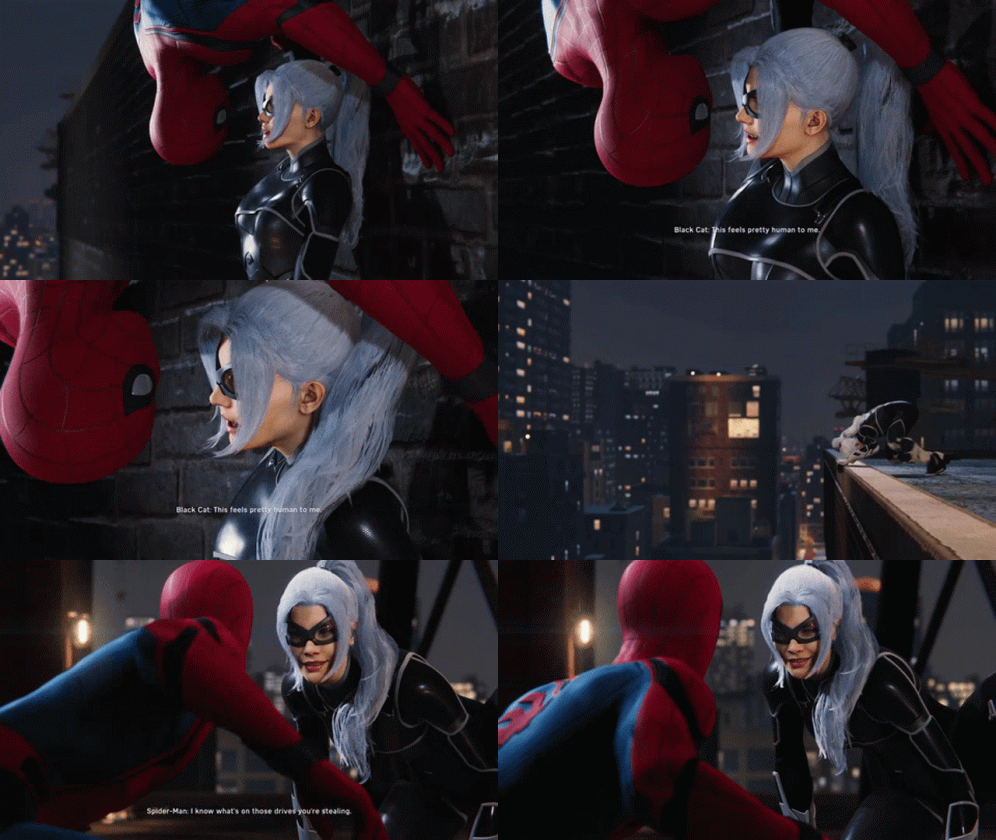
I was glad to see that Black Cat got some time to shine in this game (debuting in The Heist) as her presence was painfully missed in the base game when she was limited to a voice over at the end of her side quest. 


The game doesn't really make it obvious how you access this new content as it's accessible by selecting the DLC tab in the main menu and selecting the corresponding episode. Your progression between the base game and each of the episodes are all independent of each other, but the unlockable costumes carry over to all campaigns without a problem. 


All of the unlockable suits that can be acquired as part of this DLC.


Out of all of the costumes that they have added to this game, it kills me that they STILL haven't added the Spider-Man Unlimited costume. Is it really that much of a hassle to add into this game?

Is it really THAT hard to put this costume in the game, Insomniac?


Each of these DLC episodes can be completed in little more than a hour or two if you focus exclusively on the story-based missions, but you will spend at least another hour or two doing the new street crimes (mostly involving the Maggia crime families and Hammerhead's thugs) and side missions that open up across these campaigns. There's three new "seasons" of Speedball challenges across all of these DLCs that ends with a mildly entertaining chase after her throughout the city at the end of Silver Lining. 


Silver Sable steals the show in The Silver Lining, starting with an intense boss fight against her until she becomes an unlikely ally by the time the credits roll. 


The story across all three of these campaigns definitely lay a strong foundation for the inevitable sequel to this game and it's spin-off/expansion - Marvel's Spider-Man: Miles Morales. The narrative sends Yuri down the dark path that she is fated to take similar to her comic book counterpart, brings Spidey's old flame, Black Cat/Felicia Hardy into the limelight outside of mere mentions in the main campaign via a minor sidequest, gave Silver Sable more screen time that she desperately needed in the main campaign, while establishing that Insomniac Games have the balls to take their own continuity with these established Marvel Comics characters into their own unique direction(s) following the fates of Hammerhead and Silver Sable. To be fair though, I mentioned in my review of the base game that they had balls in the first place when they killed Aunt May during the main story campaign. 


You run into these minigun toting thugs a bit FAR too much for my taste during these three episodes. If you don't know how to prioritize taking them down first and foremost, they are going to be a constant source of aggravation.


If I had one major complaint about this trifecta of content is that they rehash the same material across the board in terms of enemy variety. It's the same issue the base game had towards the endgame phase of the story campaign. There's only so many combinations of Demon, Sable, and Prisoners that you can throw out before combat gets either extremely redundant or extremely frustrating from everything that's going on. I haven't played this game since it initially released via a weekend Redbox rental and I had totally forgotten how much I loathed fighting the rocket launcher thugs, shield-wielding armored thugs, and big bodyguards wielding miniguns. Those three enemy types deal MASSIVE damage to Spider-Man from any hit whatsoever and it's pretty goddamn cheap of the enemy AI to have several of these enemies swarming you at any given time to confuse and bungle Spidey's Spider-Sense. In a bizarre way, that's INSANELY comic book accurate as Spidey has a known weakness that his Spider Sense can be "overloaded" by too many surrounding threats around him to distinguish one over another. So kudos to the developers of this game over at Insomniac to get that detail down. By the end of this DLC content, it feels like deja vu to the reliance on so many thugs abusing Silver Sable's stolen technology and weaponry, much like her soldiers/mercenaries that were brought into the later half of the base game's story campaign.

Everything else though? These three episodes get right in terms of properly juggling stealth and combat-heavy story missions to keep things interesting. There's even one Mary Jane stealth section, but I'm not going to frown on that inclusion as it was short and sweet. It was over before you could miss playing as our favorite wallcrawler, unlike the ones during the base game's main story campaign that seemed to drag on and on and on. Each episode ends with a chase or skirmish with the titular villain in question, with The Heist and Turf Wars ending on cliffhangers to make you excited for the next entry/installment, but The Silver Lining ends on an appropriate note to tease the future of this series. Your experience with this game isn't truly complete until you play through these three additional post-game episodes to complete fleshing out the lore that this game laid the foundation for in this continuity. 


Play It or Don't Bother?

After giving you the cold shoulder for most of the base game and then in The Silver Lining, I got a good laugh out of this scene here. 


Since this content is essentially part of the game now that it is bundled together with the Game of the Year Edition of Marvel's Spider-Man on both the PlayStation 4 and the remastered/upscaled version(s) for the PlayStation 5, there's absolutely no reason for you NOT to play this content to be perfectly honest when it's part of the game by default. 

If you purchased the game at launched and didn't purchase the Season Pass, then this is a different matter altogether. Separately, I can't condone suggesting purchasing these at full price, but they are definitely worth rebuying the entire game over for as a complete package. They add hours of gameplay to an already amazing Spider-Man game - no pun intended - and set the stage for what's to come whenever Insomniac Games decides to drop a proper sequel following the success of Marvel's Spider-Man: Miles Morales. Each episode runs about an hour of gameplay time, but with the extras and side quests littered throughout each episode campaign, you have at least another 10 to 20 more hours of gameplay to this game if you didn't already 100% complete every activity in the base game. 

I don't see why you wouldn't want more from an already amazing superhero game. This is an excellent excuse to dwell in this world for a few more hours until you decide to move onto Marvel's Spider-Man: Miles Morales. 


QUICKIE -- The Mark of Kri (PlayStation 2)


The Mark of Kri is an action-adventure game developed by SCE San Diego Studio and published by Sony Computer Entertainment exclusively for PlayStation 2. The game was followed by Rise of the Kasai, which was released in April 2005.


Background:


I loved the Disney-esque art style for this game. 


With an art team consisting mostly of former 2D animators, The Mark of Kri offered a juxtaposition of cartoonish character designs and graphic violence while employing a unique visual style influenced by various Polynesian cultures and art, as well as the game's plot taking place in a Polynesian-influenced fantasy setting, and Maori mythology.

The game also featured elements of adaptive music, with techniques developed specifically for the game, and "incredibly tight synchronization [with] on-screen state changes."


The Plot:


The story begins with Rau Utu, a great and noble warrior in a new generation of warrior protectors of the bearers of the Marks of Kri called the Rakus, trained by his mentor, adopted father, and the last of the older generation of the Rakus, Baumusu.

Accompanied during his adventure by a raven, Kuzo, his chronicler and narrator of the story, he was taught stealth and extraordinary skill with his sword. He was also taught to be a hero to help those in need rather than act as a mercenary. Rau was being asked for a favor by the village innkeeper, Rongo, from the north of Tapuroku, who says that bandits are keeping business away and asks Rau to look into it. After Rau takes care of the bandits, news of his prowess as a warrior and his heroics spread far and wide.

This leads to a mysterious man showing up in the tavern, who offers Rau money for his services. Despite the uneasy feeling that Rau has about the man and Baumusu's suspicions regarding the necromancer, he accepts his offer. He then travels to the forest of Heiadoko, where he retrieves a piece of parchment from the tomb of Sambu-usu. This parchment, however, is actually one of the Marks of Kri - human skin. Rau returns home from his job to find that he's been taken advantage of by the mysterious man known simply as the "Dark One".

The man later revealed turns out to be the Ganguun Priest, a member of an evil organization, the Kasai, and is devoted to its efforts to rule the world, as well as subverting Rau's true destiny. Furthermore, Rau then is told by an elderly woman, the fortune teller named Simka, that the money Rau received from him was a counterfeit, a curse marked by the Kasai. He then is told to head north to a place called Vaitaku, to find a tree and eat its fruit, knowing that this special tree is an oracle.

After Rau eats the sacred fruit, the oracle tree informs him both of the Mark of Kri, and his destiny to protect a captured boy. The boy, the oracle says, holds the fifth mark, which the "Dark One" will soon have in his twisted possession. Furthermore, it is revealed that Rau not only has a great destiny, but will be among the gods, as his name will be used and whispered to quiet the children on stormy nights, and songs will be sung and written in his name. Finally, Rau is told that the sixth and final mark is well protected.

He then travels to the heavily guarded temple of Meifiti, to save a boy from being sacrificed. However, when Rau reaches the boy, he is already sacrificed by the Dark One, directly leading him to a trap, designed by the Dark One himself. Upon returning to the Inn, Rau discovers that his village has been attacked and destroyed as part of his devious trap. When he discovered the carnage the Kasai had wrought, Baumusu, tells him of his path in life, and that Rau must find his sister, Tati, who has the final Mark of Kri, had been taken during the attack on the village, before dying as a great noble warrior and as a Rakus.

As Rau's soul and heart demanded vengeance for Baumusu's death and his village's destruction at the hands of the Kasai, he travels to Rahtutusai, and encounters the Dark One. After Rau defeats his horde of Zombies and the Kasai troops, the Dark One asks him to join him on his quest for world domination. Rau declines by throwing an axe at the Dark One's head, killing him, avenging the deaths of Baumusu, the innkeeper, the destruction of his village, and succeeds in rescuing Tati at the end.

However, there was more work to be done between them, according to Kuzo, that Rau and Tati, now vowed to confront an old enemy long forgotten, and save the Three Kingdoms from world domination at the hands of the Kasai. "But all of this is a different story, for another time." Kuzo said before flying away.


The Verdict:


The Mark of Kri is rather interesting creature and personally one of many "white whales" that I have been chasing for years until I acquired a copy of this title and it's sequel, The Rise of Kasai (which I'll cover at a later date), via a flea market find for PlayStation 2 a few summers ago. After getting my PlayStation 4 a few years ago, I pretty much put most of the games from that console generation on hold while I focused primarily on that console. Luck may have it that both titles would go on sale rather cheap on PSN, so I figured why not when I do most of my gaming currently on that platform so it would be easier to tackle.

That being said, my review of this game will be from my experiences on the PS4 digital port of the game, even though I have experienced the first two levels (out of six) on the original PlayStation 2 platform. 


Stealth takedowns on unaware enemies are a highlight of this game with the sheer brutality of these executions.


Right off the bat, I have to mention some of the janky performance issues. During executions, stealth kills, and the switch from enemies being unaware to complete aware of your presence, there's ALWAYS this slowdown and/or hiccup in performance that was prevalent in this game all the way to the final moments of the game. I always assumed that it was the game loading resources from disk, but it's odd that even this digital copy does this as well.


I'm not going to knock the visuals at all, especially for something two-going-on-three console generations ago. I did like the Disney inspired visual art style though to the character models and cutscenes. That was the most visually appealing thing to me when I initially sought the game out. It's a constant aspect of the game that remains appealing from start to finish. The art style lends itself to the visceral execution animations as well. 


Once the "X" button prompt stopped flashing and solidified, you would be able to land a headshot to instantly kill an unaware enemy. 


Throughout the game, you have to master 4 different weapons - your basic sword, a bow, a spear, and finally a battle axe. You don't acquire the powerful axe until the final level of the game, so you will have to familiarize yourself with the sword and bow for the bulk of the game. The bow was a necessity against archers scattered throughout the levels from afar that couldn't be reached easily with your sword, so mastery of your bow would allow you to maintain undetected in stealth to eliminate tougher enemies with stealth takedowns. This game had a lot of creative ideas for that too, especially for a game during this console generation. You could perform stealth takedowns on a singular or multiple enemies at once (up to two) from traditional approaches from behind, above off ledges, or around corners. 


You can perform modified combos on a singular enemy by combining inputs from unused face buttons into your combo strings.


The melee combat in The Mark of Kri was an unique creature all on its own and it's the most distinct gameplay trait that I'm sure that most people will remember about this game. The right analog stick can circle around your character with an arrow that will highlight each nearby threat with a button prompt that will allow you to attack them. Range and proximity took priority over how you were able to attack these targets as you will lunge towards far away foes and keep your strikes more focused on nearby opponents. This was the hardest thing to wrap my head around, especially coming from traditional action games with simple lock-on button. Once this unconventional approach to melee combat clicked, I honestly couldn't see this game working any other way. The melee combat gets even deeper once you unlock the spear and finally the axe in the later levels, which both weapons allow you to tag multiple enemies to a single button press. I personally found the axe to be the best of the available melee weapons at your disposal over anything else. Once you acquire that weapon at the start of the final level in the game, it's hard to put that weapon down in favor of your other weapons - at least until you're forced to use other weapons once those "imps" in the final level rob you of your weapons. I swear those are easily the most annoying enemies in the game to deal with and will be the source of your frustrations in the final level until you learn where they are going to approach from. 


The "imps" that only appear in the game's final level that can steal all of your melee weapons from you if they swarm Rau at once. The only way to retrieve your weapons is to kill them and take them back. 


I have seen people compare the melee combat in this game to the Batman: Arkham themed series of video games, but I wouldn't necessarily regard it as the same. This isn't button-masher friendly and there's moments where you really have no idea whether or not your attacks are doing enough damage. Plus this game has no "redirect" button to catch your breath and "reset" the enemy mobs in a sense, leading to a LOT of moments, especially towards the end of this game where you will game over EASILY from enemies swarming you to death without any window for retaliation. On the flip side, this game has a "counter" of sorts. You have to be completely unarmed without any weapons equipped and to tap the "block" (L1 on PS2 and PS4 controller) button at the exact moment an enemy attempts to strike you. The titular character will then disarm the enemy and use their own weapon to kill them instantly. This is a VERY overpowered ability, especially late into the game, despite the fact that the in-game tutorial/hints will mention that the technique will get harder to execute the more times you do it in succession, but I never noticed any difference in execution when I did it at least a dozen times in one enemy encounter. I'm just saying that your experience may vary. I should mention that the game has a major issue with hit detection too. Enemies can damage you during executions/finishers on other enemies (as well as your slow as hell animation to put away your weapon to prepare for a disarm), but there's instances where you can just run past an entire mob and just go to the next room without even bothering to kill a single one of them. Even that isn't foolproof as some enemies can chase behind you with ease, sweep out your legs from underneath you to allow the surrounding enemies to pummel you with attacks before you can even stand up again. 

It's moments like those that made me laugh in terms of game design. I got through a lot of "troublesome" areas of the game (namely the end of Level 3: Heiadoko) by merely saying "Fuck this, I'm out..." and just running to the next checkpoint/area with save scroll/health refill. I should mention that the game doesn't auto-save until the start and ending of levels. If there is a cutscene mid-level, the game will provide a checkpoint after that plays out, otherwise the game expects you to acquire save scrolls (up to six) across the levels to save at your own leisure. Otherwise, you will be doing a LOT of backtracking if you die on these levels.

There are only six levels in the entire game. You will think that's short, but after the first level, each stage is pretty long, depending on how you approach them. The last two to three levels took me anywhere from two to five hours to complete on their own in a setting. The game has a pattern that goes like this when you start the game. You start off at the inn in the village that you call your home. You speak to all of the NPCs in the inn, usually ending with training with Rau's master, Baumusu, who teaches you the basics of how to play the game or whatever new weapon/technique the game wants you to master to its fullest in the upcoming mission. These tutorials provide a training space of sorts to hone those techniques before being tasked with the next mission to undertake in the upcoming level. Each level has "Baumusu Challenges" to complete for a reward (the ability to use all of your acquired weapons in any level of your choosing in replays) while there are hidden treasures to find along with other optional power-ups that will augment your maximum health for the duration of that level. Once you acquire the bow, you are going to have to keep a steady supply of arrows too, but as long as you're landing head shots, then you shouldn't have any issues with running out of arrows. After completing the corresponding stage, you return to the inn and start this cycle all over again. By the end of the third stage, this cycle got pretty redundant for me. Fortunately, things change up before the story comes to an end, but I won't spoil the rhyme nor reasoning behind that. You traverse each level cautiously, especially in the later levels, using Rau's raven, Kuzo, to scout the area ahead. Rau can see through his pet's eyes and see upcoming threats and plan accordingly how to approach them best. Kuzo can also be used to trigger hidden glyphs and switches in the environment and to receive far away items close to his perches. Your survival in the later levels depends on using Kuzo to scope out your surroundings before heading into a new area blindly. Otherwise, you risk alerting horn blowers who will alert all surrounding enemies to your presence while summoning more foes to deal with for your trouble. When this happens, you can pretty much guarantee a game over, so I found myself not risking getting caught at all by horn blowers. 


Play It or Don't Bother?


The Mark of Kri is definitely a creature unlike anything else at it's time when it was released for the PlayStation 2. Even though I have minor issues with the occasional slowdowns during gameplay and some iffy hit detection, my biggest gripe with the game personally is my own stubbornness of waiting so long to play it. This is a game that has a lot of interesting ideas, even years after the fact that I could easily see making a splash if the developers were given the opportunity at a current generation remaster or sequel. Speaking of sequels, I'll cover The Mark of Kri's PlayStation 2 sequel, Rise of the Kasai, at a later date. 

If you are unable to hunt down a copy of this game for PlayStation 2, the digital copy for PlayStation 4 tends to be on sale a lot for less than $10. I played the majority of the game for this review using that version of this game and didn't run into any gamebreaking issues. 

QUICKIE -- The Messenger (2018 video game)


The Messenger is a sidescroller action-platformer, developed by Sabotage Studio and published by Devolver Digital. It draws inspiration from the Ninja Gaiden series and other retro games.


Plot:


The game begins with a village of ninjas being attacked by a Demon King. It is then that a supposed "Western Hero" appears and gives a scroll to one of the surviving ninjas, appointing him as "The Messenger" and telling him to deliver it to the top of a mountain. During his journey, the Messenger is aided by a mysterious blue-robed shopkeeper, who provides him with upgrades, and a demon named Quarble, who helps to save him from death. After traveling through various areas and meeting a variety of foes turned friend, the Messenger arrives at the Tower of Time and encounters more blue-robed figures, who send him 500 years into the future to defeat the Demon King's general, Barma'thazël. Upon doing so, the Messenger loops around the world to the ninja village, where he, having reached the point of a cycle where he becomes the Western Hero himself, passes the scroll onto a new Messenger and takes up the role of a shopkeeper providing him with upgrades.

When this new hero ends up dying due to the previous shopkeeper's negligence, however, the blue-robes aim to break the cursed cycle, tasking the Messenger with collecting the notes of a mysterious music box in the Tower of Time. After the Messenger succeeds in this task, defeating the Demon King in the process, it is revealed that the music box is the prison of a man known as the Phantom who had become inflicted with a curse and created the time-traveling scroll in an attempt to stop it. This resulted in a 500-year-old mission passed down to several Messengers from various eras. Venturing inside the music box, the Messenger finds the Phantom, defeats the curse possessing him, and rescues him. The curse breaks loose, but the Messenger and the blue-robes team up together to destroy it, putting an end to the curse.


Gameplay:


The Messenger is a side-scrolling action-platformer, inspired by the classic Ninja Gaiden series. Players control a ninja known as "The Messenger" as he goes on a quest to deliver a scroll. The Messenger initially possesses a technique called "Cloudstepping", which allows him to perform an extra jump in mid-air after attacking an enemy, object, or projectile. As the game progresses, the Messenger gains new abilities such as climbing walls, gliding in the air, long-range shuriken attacks, and using a grappling hook to propel himself through obstacles and enemies. By collecting Time Shards earned by defeating enemies or hitting lamps, the player can purchase additional upgrades such as health bonuses or extra attack moves. If the player dies, however, a demon named Quarble will appear and automatically claim any Time Shards the player collects as payment for a short amount of time.

The game initially presents itself as a linear level-based adventure split across two eras; the past, which is presented with 8-bit graphics and audio, and the future, which uses 16-bit presentation. Later on, however, the game becomes a Metroidvania-style game, in which the player revisits past eras in any order and direction in order to find key items. In this section of the game, the player can use special warps to instantly move between the past and present, instantly changing the layout of each level and allowing them to access new areas. Hidden in some areas are green medallions (called Power Seals), earned by completing a challenging platforming section, with a bonus unlocked for collecting all 45.


The Verdict: 


For any fan of Ninja Gaiden-style NES style action, look no further than The Messenger. The first half of the game is clock full of action and platforming heavily inspired by that series with a few great boss battles to top off each level. When you reach the end of this portion of the game and defeat the "final boss" of sorts, the entire game opens up completely, Metroidvania-style, to revisit the previous areas of the game to retrace your steps and discover things you may have missed while accessing new alternate paths with the abilities that you have acquired along the way. What really makes this portion of the game truly unique is the ability to switch between the past (8-bit graphical style) and future (16-bit graphical style) and take stock of how the environments have changed as a result of the passage of time. 


Once you gain the ability to travel between the past and future, that's when the game truly opens up to you in terms of exploration.


As unique that the past/future gameplay element brings to this game, it's also a tad problematic in a sense as this Metroidvania portion of the game is the most problematic. Where the first half of the game was linear in terms of going to point A to point B, the second half gives players no sense of direction nor idea of what the hell that they should be doing. You're tasked with collecting all of the music notes to play the music box, but offered little to no idea on how to find them. Players can purchase "hints" from the shopkeeper, but they are as vague as the in-game texts that describe your objectives in this portion of the game. Eventually, I grew tired of aimlessly wondering around the previous locales and resorted to referencing the good ol' Google machine to consult a walkthrough guide to complete this portion of the game. I understand that the developers wanted to recapture the magic that made games, such as Super Metroid and Castlevania: Symphony of the Night so iconic for this genre, but that archaic gameplay style of not providing the player with any concrete idea of where or what they should be doing is a bit much for gaming in 2020. Not every player is going to appreciate that deal of retro/old school gaming nostalgia, especially when modern players 

Quarble's jokes to comment on every single one of your deaths range from hilarious to downright infuriating. I was at least 250+ deaths in the game and they definitely recycle some dialogue, but never did they not suit the occasion. The only thing you can do is shake your head and keep going. Quarble disappears out of fear during boss encounters, so you don't have to worry about him eating your precious currency in those encounters. 

In relation to Ninja Gaiden and retro gaming in general from the NES era, this game shares a lot of beats with the sheer brutality of how "cheap" and punishing some of the platforming and enemy placement in certain areas of the game are laid out. It's fortunate that players have crisp, responsive controls to fall back on as you have no one but yourselves to blame for not being able to maneuver through those areas with pinpoint accuracy and precision. 


A small glimpse of this game's movement and platform in action by use of the Rope Dart to accelerate vertically. 


Movement in this game is a thing of beauty to behold once truly mastered and something that's required if players hope to collect all 45 Power Seals. Each one is safely hidden in various portions of the map throughout the game that require players to navigate a challenging platforming section to obtain the Power Seal. Once you obtain all 45 Power Seals, you can open the green treasure chest in the shopkeeper's room to obtain the Windmill Shuriken. Take it from me that completing all of these trials and obtaining all of the Power Seals is no easy feat. I found and obtained 28 out of 45 as of this posting and I seriously doubt that I'm motivated enough to hunt down the remaining 17 Power Seals. 

I will definitely applaud this game for its wealth of unforgettable boss encounters that put your skills to the test one after another. Each one requires you to put whatever new ability or weapon that you have acquired to the test, similar to how The Legend of Zelda series does with the bosses of each dungeon. Kudos to the developers to how creative they were with a lot of the bosses' weaknesses too as that crap wasn't obvious for a lot of them. 

There's a lot of love for the Metroidvania genre as a whole too here, from the Sun and Moon Crests operating like the Clock Tower in Castlevania: Symphony of the Night to the Ordinary Wax Candle to navigate your way through the Dark Cave (which ironically made me think of the multiple visors in the Metroid Prime series). If that wasn't enough, there's a wealth of hilarious and insightful stories to listen to from the shopkeeper if you have the time to chat with them during your adventures. A lot of that dialogue is worth the price of admission to play this game alone. It's great that the blue robes don't lose that sense of humor when it comes to their role in the game's overall narrative either. 

I would be doing this write-up a disservice if I didn't mention the excellent soundtrack to this game. 


One of my favorite tracks in the game - only one of many memorable tracks in this excellent soundtrack. 


Downloadable Content: "Picnic Panic" Add-on Expansion


As of this posting (10/5/20), I'm still playing through this additional content in an alleged alternate timeline from the events of the game's main quest line. It provides more of the same, but with some new enemies and challenging bosses to overcome. 

I will update this post with my thoughts upon completion at a later date. 

UPDATE (11/10/20): I finished the DLC add-on last night and I'll offer my thoughts on it briefly. 

The DLC can be accessed at anytime in any of the shopkeeper's huts and interacting with the corresponding idol. You will be teleported to an alternate timeline, similar to the one of the main adventure with slightly different outcomes to events to hilarious effects. It's better that I don't spoil them but the new region has it's own challenges to conquer (mask fragments and feathers) to collect in terms of optional challenges like the Power Seals, but the new adventure offers some new challenges that will test your mastery of the skills you've acquired in the main adventure to their limit. You don't gain any new powers/abilities here, but I felt that this DLC add-on almost forces you to master all of your abilities by the time it's all said and done. I thought the bosses here were some of the most challenging in the game, but at the same time, they were the most fair - to an extent anyway. The developers maintain their callbacks to NES-era gaming, with the final boss of this DLC taking a page straight out of Mike Tyson's Punch-Out!! and Super Punch-Out!! in terms of mechanics to that final climatic battle. 

Once the adventure is over, you can play through the adventure again to your leisure after accessing the idol again in the shopkeeper's hut. 

To my knowledge, this add-on is FREE to all owners of the game for no additional price. That's a steal for something that easily adds a few more hours of playtime for anyone who has already cleared the main adventure's quest line. 


Play It or Don't Bother?


If you're a fan of the retro Ninja Gaiden titles or just looking for a challenging new Metroidvania title to pick up, look no farther than The Messenger. On the other hand, I can easily see why this style of NES-era retro gaming wouldn't be for everyone though from the punishing difficulty at certain parts of the game. Regardless of the challenging spikes of difficulty at times with the platforming and lack of a general idea of what or where you should doing and/or going in the latter half of the game, there's something to enjoy here for everyone - ranging from the hilarious narrative that doesn't skip any opportunities to drop a punchline or two among the serious nature of some of these battles and situations at times to solid, crisp controls. 

The Messenger was free on Twitch Prime after it's debut in AGDQ that year and one of my biggest regrets was not experiencing the game for myself until after it made it's way onto the PlayStation 4, despite watching several speedruns of it from noteworthy runners, such as TheMexicanRunner. The Picnic Panic DLC add-on expansion is still currently free on both Steam and PlayStation Network while the base game is reasonably priced across various platforms. It shouldn't cost you more than $10-20 for this game either digitally or physical brand new - a price that's more than worth it in my eyes.